


CDL Prep 2026: Test Practice
3.4111.00 Reviews
App Specs
- Version
- 1.7.11
- Updated On
- License
- Free
- Downloads
- 100,000+
- Developer
- Nam Nguyen Unisoft
- Categories
- Education
- Platform
- Android
Screenshots
 Analysis by AppCompare
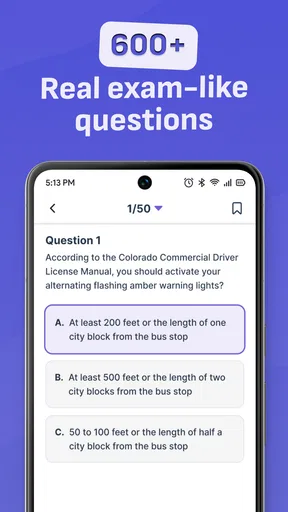
Preparing for a commercial driver’s license is less about finding one impressive study session and more about building a routine that survives busy days, repeated mistakes, and the gradual boredom of practice. I spent time with CDL Prep 2026: Test Practice with that standard in mind. It is a free education app from Nam Nguyen Unisoft, aimed at people who want practice questions and mock-test preparation for CDL exams across the states. My first impression was that it is easy to understand: open it, choose a practice path, and start testing yourself rather than spending time arranging a complicated study system.
That simplicity is the main reason it feels useful during the first week. It is also the reason I would not treat it as a complete replacement for an official handbook, instructor, or state-specific guidance. The app can help turn spare moments into study sessions, but its lasting value depends on how deliberately you use it. If you only tap through questions until the answers feel familiar, the benefit fades quickly. If you use wrong answers to identify weak areas and return to them regularly, it has a much better chance of earning a permanent place in your preparation routine.
How CDL Prep 2026 feels in the first week
The opening experience is straightforward enough for a learner who does not want a lesson platform full of extra menus. The store summary focuses on practice and mock tests, and that is the right way to approach this app: as a testing companion rather than a full driving school. I found the question-based format more practical for short sessions than reading a long chapter when I had only a few minutes available.
A realistic use case is a learner who has a lunch break, a wait before work, or a quiet period at home. Instead of promising to study for an hour and then postponing it, I would use the app for a compact set of questions, note the subjects that caused trouble, and review those subjects from the appropriate official material afterward. That workflow matters because answering a question correctly is not always proof that the underlying rule is understood. Sometimes I remembered the pattern of the answer rather than the reason behind it.
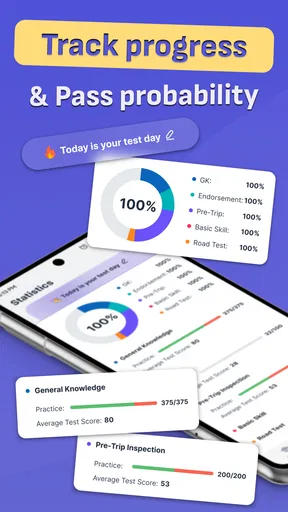
The mock-test approach is most helpful when I use it as a check on readiness, not as entertainment. A practice result can reveal whether I am consistently prepared or merely comfortable with questions I have already seen. I would take an early test before serious studying, then repeat that process after reviewing weak areas. The useful comparison is not simply whether the latest attempt feels better, but whether the same categories keep causing errors.
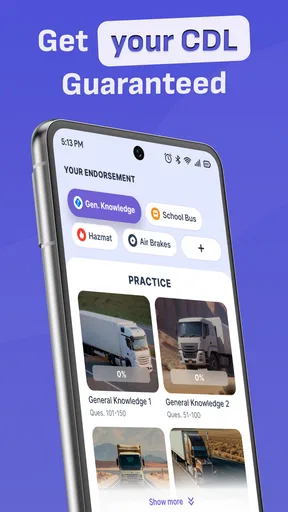
One of the app’s practical advantages is its broad state-oriented purpose. CDL requirements and testing emphasis can differ depending on where a learner is applying, so I would first identify the exact state material and endorsement goals that apply to me. Then I would use the app to reinforce that preparation rather than assuming every question has equal importance everywhere. The smartest first-week habit is to pair app practice with the official requirements for your own state.
The app is suitable for Everyone in its content rating, which makes the presentation approachable for a wide range of learners. That does not mean every learner will find it equally complete. Someone who already understands commercial vehicle concepts may mainly want fast recall practice, while a beginner may need explanations, diagrams, and instructor guidance that a test-focused tool cannot fully provide. I would begin with it if I wanted a low-friction way to discover what I do not know, not if I expected it to teach the entire subject from the ground up.
Worth Reading Before You Choose

EA SPORTS FC Mobile 26 Is a Bigger Football Game, but It Takes Time

Flipboard Shows What News Apps Must Do Beyond the Feed

Switching to Android Auto Means Rethinking Your Driving Routine

Google Calendar Makes a Crowded Week Easier to Manage

Ludo King Makes the Most of the Minutes Between Plans

Baby Panda World Brings Quick Play to Modern Phones, but Its Game Library Feels Busy
What makes the early routine effective
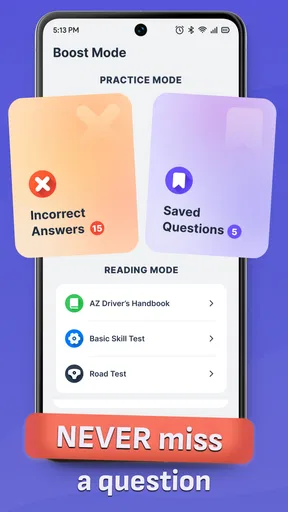
I recommend separating recognition from recall. On the first pass, answer without looking for clues and mark the questions where you guessed. On the second pass, revisit both incorrect answers and lucky guesses. This small distinction prevents a common problem with practice apps: a learner sees a familiar question, recognizes the correct option, and mistakes that familiarity for mastery.
I would also avoid doing every session in the same setting. A quick session at home is useful for learning, but a short session during a normal interruption is a better test of whether the information is becoming dependable. The goal is not to create artificial pressure; it is to make the study habit flexible enough to continue when the day becomes inconvenient.
Another useful approach is to keep a separate note of the reason for each mistake. I would write a short explanation in my own words rather than copying an answer. If I cannot explain why an option is correct, I would treat that question as unfinished even if the app records it as correct later. This turns the app from a button-tapping exercise into a diagnostic tool.
Why the value may or may not last after the first month
The first week provides novelty, but the month-to-month question is more demanding: does the app still help once the same format becomes familiar? In my view, it can, but only when the learner changes the purpose of each session. Early practice is about discovering gaps. Later practice should be about maintaining recall, checking consistency, and preventing weak topics from disappearing under stronger ones.
I would divide longer preparation into three modes. The first is learning, where I slow down and investigate mistakes. The second is checking, where I complete a mock test without interruptions. The third is maintenance, where I revisit difficult subjects at intervals instead of waiting until the day before an exam. Using the same mode every time is one of the fastest ways for a practice app to become repetitive.
This is where the app’s free entry point is helpful. I can establish a routine without committing money immediately. At the same time, in-app purchases range from $8.99 to $74.99 per item, so I would inspect what an optional purchase adds before paying. I would not buy simply because I had reached a frustrating score. A purchase is easier to justify when I already know which part of my preparation needs more support and whether the added material directly addresses it.
The app has reached over 100,000 installs, which suggests that it has found a meaningful audience among CDL learners. Its average rating is 3.4 from around 243 ratings, with about 111 written reviews. I read that combination as a reason to keep expectations measured: enough people have tried it to make it worth considering, but the rating does not support treating it as a flawless or universally satisfying study solution.
For recurring value, I would use a weekly rhythm rather than opening it only when anxiety rises. One session can be a diagnostic test, another can target a weak subject, and a later one can repeat mixed practice. If the app offers several ways to practice within its available material, rotating them can reduce memorization of the interface itself. If a question starts feeling familiar, I would explain the rule aloud before selecting an answer. That extra step is especially valuable for people who are preparing while working full time.
Who is likely to keep using it
This app makes the most sense for a learner who already has access to a handbook, class, or other reliable study source and wants more opportunities to test recall. It is also a reasonable fit for someone who studies in short bursts and needs a portable way to turn waiting time into useful repetition. The low cost of starting makes experimentation easy, particularly when I am still deciding whether app-based practice suits my learning style.
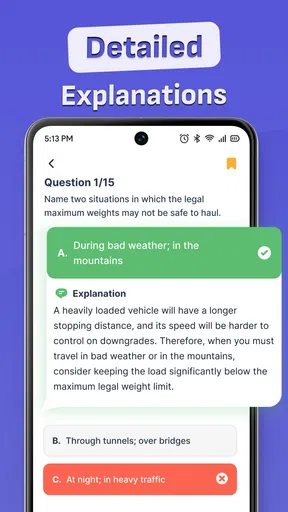
I would be more cautious if I were completely new to CDL material and wanted every answer explained in depth. A question bank can tell me that I am wrong without giving me enough context to understand the safety principle behind the mistake. In that situation, an instructor-led course or a detailed state manual should carry the main teaching responsibility, while this app serves as a supplement.
It is also less suitable for a learner who dislikes repeated testing or who needs visual demonstrations and hands-on examples. No practice screen can substitute for understanding vehicle inspection procedures, developing safe habits, or receiving feedback on real-world driving. The app belongs in the preparation toolkit, not in the driver’s seat.
The maintenance burden and the points where fatigue appears
Maintaining a study app is not technically difficult, but maintaining attention is. The current version is 1.7.11, and the app was released on January 13, 2023. Those details place it in an established product cycle rather than a brand-new experiment, but they do not change the basic work required from the learner: return regularly, review errors honestly, and keep the app aligned with the exam requirements that actually apply.
The biggest burden is deciding what to do with a wrong answer. If I simply press onward, the session feels productive while leaving the misunderstanding untouched. I would pause after important errors and classify them: was the problem unfamiliar terminology, confusion between similar rules, careless reading, or a genuine gap in knowledge? Each cause calls for a different response. Terminology needs a definition, rule confusion needs comparison, careless reading needs slower practice, and a knowledge gap needs outside study.
Another maintenance issue is keeping the app in its proper role as the exam approaches. Practice scores can create false confidence when the question style becomes familiar. I would reserve some sessions for material from the official source and use the app afterward to check retention. If the two sources seem to emphasize different details, I would follow the current requirements of the relevant licensing authority rather than guessing that the app is automatically the final authority.
Fatigue usually arrives in predictable ways. The first is repetition without reflection: the learner answers quickly but cannot describe the rule. The second is score chasing: a high result becomes the goal, even when the same weak topic is being avoided. The third is overloading: long sessions produce careless clicks and make the next session feel unpleasant. I get better long-term use by stopping while I can still explain what I learned, then returning later.
There is also a financial fatigue point. Because optional purchases can reach $74.99 per item, I would avoid treating every locked or extra resource as necessary. The free experience should be judged on its own usefulness first. If I decide to spend money, I would compare the purchase with the cost and value of a handbook, class, or other established preparation method. The right question is not whether more material exists, but whether it solves a specific problem in my preparation.
How it compares with the usual alternatives
Compared with a paper handbook, the app is quicker for active recall and easier to fit into small gaps in the day. A handbook is usually better for slow reading, context, and checking the exact wording of requirements. I would use both differently: the handbook to build understanding and the app to test whether I can retrieve it without prompts.
Compared with a general quiz app, CDL Prep 2026: Test Practice is more focused on commercial driving preparation and state-oriented practice. That focus saves time for a CDL learner, although it also means the app is not useful for someone seeking broad driving education or a general road-safety refresher. Compared with an instructor or formal course, it is more flexible and less personal, but it cannot observe my practical skills or correct a misunderstanding through conversation.
That trade-off explains why I would recommend it more strongly to an organized learner than to someone who needs external accountability. If I already know when I will study and can follow up on mistakes, the app adds convenient repetition. If I routinely skip practice unless a teacher assigns it, a course or study partner may provide more lasting value even if the app itself is easier to open.
My long-term verdict on keeping it installed
After the novelty fades, I think CDL Prep 2026: Test Practice earns its place as a supporting tool, not as the entire preparation plan. Its strongest quality is convenience: it gives me a direct way to practice questions and mock tests without turning every study session into a major project. That matters for learners balancing work, family, and training.
I would keep it installed through a preparation period if I were using it with a clear system: identify the correct state requirements, study the underlying material elsewhere when needed, record why answers go wrong, and return to weak areas on a schedule. I would also use mock tests to measure consistency rather than to collect impressive scores. Those habits make the app more durable than its novelty alone.
I would skip it if I wanted a complete course, detailed teaching for every answer, or practical coaching. I would also hesitate to pay for extras before proving that the free starting point fits my routine and before identifying exactly what additional content I need. For learners who prefer books, classrooms, or hands-on instruction, those alternatives may be better as the main resource.
My recommendation is therefore positive but specific. This free education app is worth trying for CDL candidates who need regular question practice, especially those who study in short sessions and want a simple way to check readiness. It is not a shortcut to guaranteed success, and its lasting value depends on disciplined use. Keep it for repetition and diagnosis, but let official material and real instruction supply the depth. Used that way, it can remain useful from the first exploratory quiz through the less exciting, more important stage of steady maintenance.
Pros
- Covers updated CDL topics for 2026 exam preparation.
- Practice questions help identify weak knowledge areas quickly.
- Useful for studying in short sessions during commutes or breaks.
- Includes multiple commercial driving subjects in one app.
- Simple interface makes practice tests easy to start and navigate.
Cons
- Does not replace official manuals or professional behind-the-wheel training.
- Some explanations may be too brief for difficult regulations.
- Question wording may differ from your state’s actual CDL exam.
- Full access may require payment or include subscription limitations.
- Requires careful checking for updates as CDL rules can change.
FAQs for CDL Prep 2026: Test Practice
What is CDL Prep 2026: Test Practice?
CDL Prep 2026: Test Practice is a mobile study app designed to help aspiring commercial driver’s license applicants prepare for written knowledge exams. It typically covers subjects such as general knowledge, air brakes, combination vehicles, hazardous materials, passenger vehicles, and other endorsements. The app uses practice questions and quiz-style sessions to help you review important concepts before taking an official CDL test.
Can CDL Prep 2026 help me pass the official CDL exam?
The app can be a useful preparation tool, but it cannot guarantee that you will pass the official exam. Its practice questions may help you become familiar with common topics, identify weak areas, and improve your confidence. However, requirements and questions can vary by state, so you should also study your state’s official CDL handbook and confirm that the app’s material matches the latest local testing rules.
What CDL topics and endorsements are included in the app?
CDL Prep 2026 generally provides practice for core knowledge areas and may include endorsement-specific subjects, such as air brakes, combination vehicles, hazardous materials, tanker, passenger, school bus, and doubles or triples. The exact selection can depend on the app version and your device. Before downloading, check the current store description to confirm that the endorsements you need are available.
Does CDL Prep 2026 work without an internet connection?
Many practice-test apps allow users to review downloaded question sets without a continuous internet connection, which is convenient when studying during a commute or in areas with limited service. Nevertheless, some features may require internet access, including advertisements, account functions, progress synchronization, updates, or premium purchases. It is best to open the app once while online and test its offline behavior before relying on it.
Is CDL Prep 2026: Test Practice free to use?
The app may be available as a free download, but free access can include advertisements, limited question sets, or restrictions on certain study modes. Additional tests, explanations, or endorsement sections may require an in-app purchase or subscription, depending on the version offered in your region. Review the pricing details, billing terms, and privacy information in the Google Play Store or Apple App Store before subscribing.


